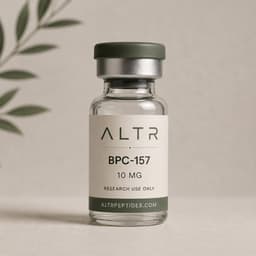
Handling
Cold-Chain Handling: Why Storage Discipline Matters
ALTR Research Team · July 28, 2026 · 4 min read
Testing happens once. Handling happens continuously, from the moment a batch leaves the lab to the moment it reaches a bench — and it's the stage where quality is most commonly lost after the fact.
Why temperature matters
Lyophilized (freeze-dried) peptides are relatively stable at room temperature for short periods, but repeated heat exposure — a hot delivery truck, a warm mailbox, a windowsill — accelerates degradation over time. The compound doesn't fail all at once; it degrades incrementally, which is exactly what makes it easy to overlook.
In transit
We ship with insulated packaging and cold-chain materials sized to the expected transit window, and we track lot-level handling from dispatch to delivery. Discreet packaging and temperature control are not mutually exclusive — both are treated as baseline requirements, not premium add-ons.
On the bench
Once received, lyophilized vials should be stored at 2–8°C until reconstitution. After reconstitution, most peptides have a materially shorter usable window and should be refrigerated and used within the timeframe specified on that product's storage instructions — not the dry-vial timeframe.
A CoA describes the compound at the moment it was tested. What happens to it afterward is a handling problem, not a testing problem — and it's one we treat as our responsibility, not the courier's.
Every batch we sell ships with independent, lot-specific testing.
Browse the current catalogue or look up a batch's Certificate of Analysis on the Lab Results page.